
The Importance of Digital Imaging in Diagnosing Dental Problems

How digital imaging is revolutionizing the diagnosis of oral and dental diseases, and what techniques are used to achieve unprecedented diagnostic accuracy.
The Importance of Digital Imaging in Diagnosing Dental Problems
Digital Imaging in Dentistry 16 June 2026 Dr. Abdulaziz Alzafiri

The Importance of Digital Imaging in Diagnosing Dental Problems

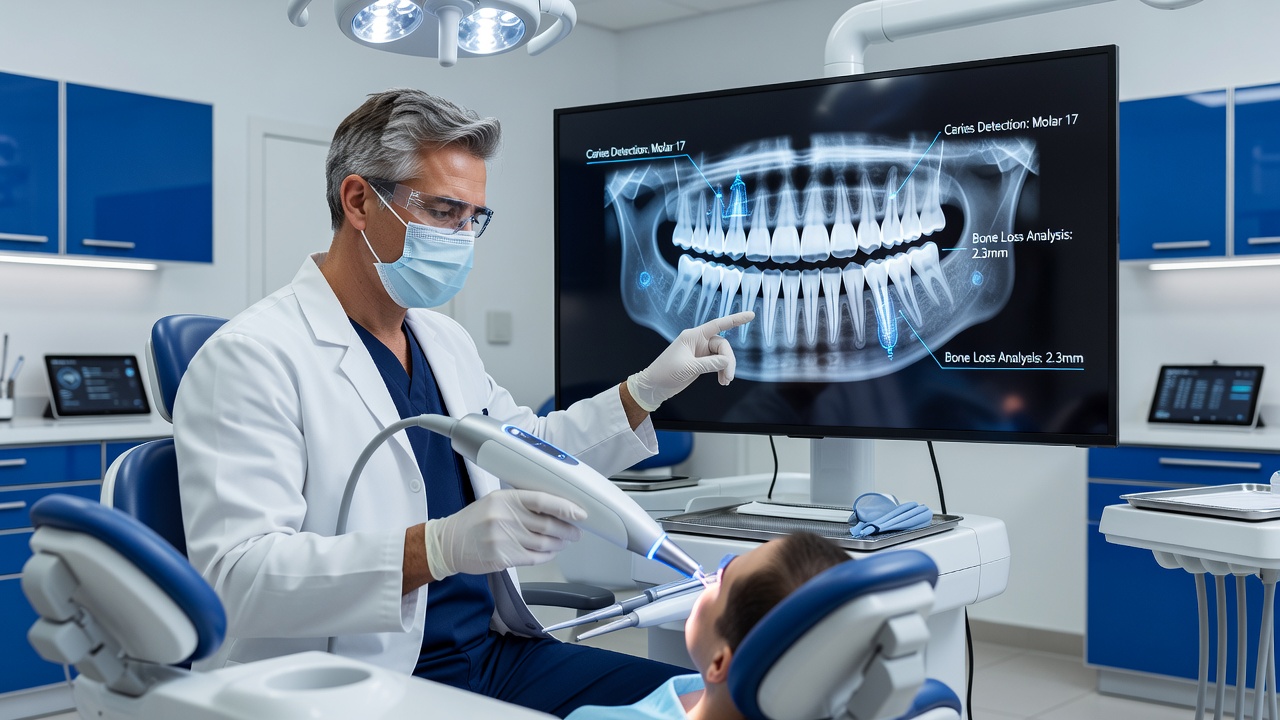
<h2>What is Digital Imaging in Dentistry?</h2> <p>Digital imaging in dentistry is the use of advanced technologies to capture precise images of teeth, jaws, and surrounding tissues. It differs from traditional imaging by providing instant, high-quality images that can be easily modified, enlarged, and analyzed.</p> <h2>The Importance of Digital Imaging in Accurate Diagnosis</h2> <ul> <li><strong>High Accuracy:</strong> Digital imaging reveals fine details that may be missed by the naked eye or traditional X-rays.</li> <li><strong>Reduced Radiation:</strong> Digital X-rays reduce radiation dose by up to 90% compared to traditional films.</li> <li><strong>Instant Results:</strong> No need to wait for film development; images appear on the screen immediately.</li> <li><strong>Electronic Storage:</strong> Images can be saved in the patient's electronic file and compared over time.</li> <li><strong>Easy Sharing:</strong> Images can be easily sent to specialists or insurance companies.</li> </ul> <h2>Types of Digital Imaging in Dentistry</h2> <ul> <li><strong>2D Digital Radiographs:</strong> Include panoramic X-rays, bitewing X-rays, and periapical X-rays.</li> <li><strong>3D CBCT X-rays:</strong> Provide accurate 3D images of bones, teeth, and soft tissues.</li> <li><strong>Intraoral Imaging:</strong> Small cameras capture high-resolution images of teeth from inside the mouth.</li> <li><strong>External Facial and Smile Imaging:</strong> For analyzing smile harmony and design.</li> </ul> <h2>The Role of Digital Imaging in Various Treatments</h2> <ul> <li><strong>Dental Implants:</strong> Precisely locating bones, nerves, and blood vessels.</li> <li><strong>Orthodontics:</strong> Assessing tooth position and their relationship to the jaws.</li> <li><strong>Root Canal Treatment:</strong> Mapping root canals and determining their length accurately.</li> <li><strong>Smile Design:</strong> Analyzing facial features and tooth harmony.</li> </ul> <h2>When Does a Patient Need Digital Imaging?</h2> <ul> <li>Early detection of cavities between teeth.</li> <li>Assessing the health of supporting bones for teeth.</li> <li>Preparing for dental implant or orthodontic procedures.</li> <li>Diagnosing unexplained tooth pain.</li> <li>Monitoring the progress of a specific treatment.</li> </ul> <h2>Is Digital Imaging Safe?</h2> <p>Yes, digital imaging is very safe. Radiation doses are extremely low, and the doctor uses lead protective aprons to protect the patient. The diagnostic benefits far outweigh any potential risks.</p>